
Build a Kyoto temple and garden day
A Kyoto temple visit can be the starting point for a day that also includes gardens, a palace or a museum. Kyoto was established in 794 and remained the imperial capital until the middle of the nineteenth century. Its wooden religious architecture and garden art help explain why looking closely at a few places can be more rewarding than filling a day with distant stops.
The UNESCO property is the serial Historic Monuments of Ancient Kyoto, covering Kyoto, Uji and Otsu. It was inscribed in 1994 and contains 17 components. Keep that specific designation in mind when reading about individual places. Start your route with Ginkaku-ji and Nanzen-ji, or choose the Botanical Gardens and Imperial Palace according to your interests. The itinerary guide helps organise the wider day.
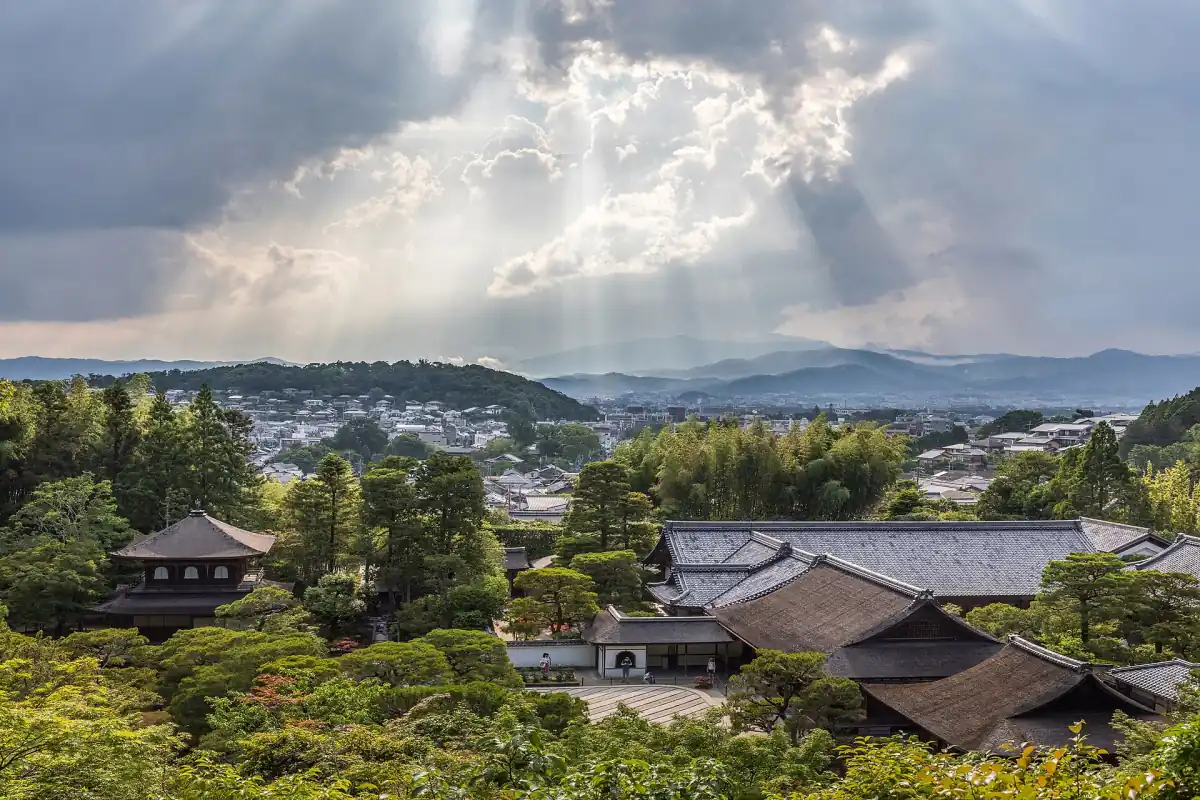
Ginkaku-ji and Nanzen-ji: separate admissions
Ginkaku-ji admission changed on 1 April 2026 to JPY 1,000 from high-school age and JPY 500 for elementary and junior-high pupils; younger children enter free. As of 3 November 2026, the standard hours were 08:30 to 17:00 from March through November, and 09:00 to 16:30 from December through February. Pair the visit with the Philosopher’s Path if the canal walk suits your day.
At Nanzen-ji, the Hojo garden and Sanmon have separate admissions: general JPY 600, high school JPY 500, elementary and junior high JPY 400 for each. Regular visiting hours were listed as 08:40 to 17:00 from March through November and until 16:30 in winter, with admission ending 20 minutes earlier. General visits are suspended from 28 to 31 December. Select the actual spaces you want to see when setting your budget.
Cycle around Kyoto’s temples
This guided bike tour explores areas around Kyoto’s temples.
Hand-picked tours, booked through GetYourGuide. Prices are indicative starting prices in US dollars (as of October 2026). Tap a tour for live availability and the current price in your currency.
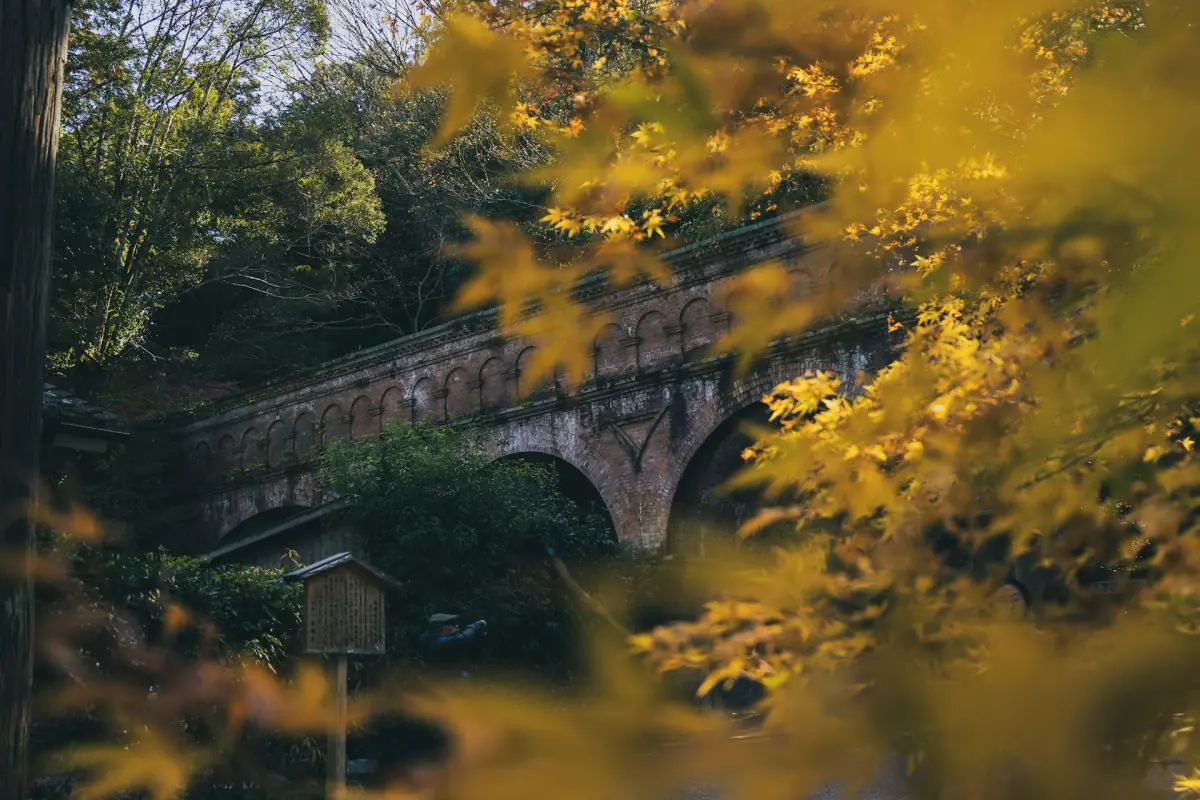
A guided ride between shrine and temple
Visit Heian and Nanzen-ji on a three-hour bike or e-bike outing with an English-speaking guide.
Heian and Nanzen-ji by bicycle
The three-hour guided cycling outing visits Heian and Nanzen-ji and follows a route that also includes the Philosopher’s Path and rivers. An English-speaking guide and either a cross bike or e-bike are included, depending on the option selected. Commentary focuses on modern Kyoto. Food and drinks are extra. The free helmet rental promotion applies only to November 2026 tours and ends on 30 November 2026.
The meeting point is the Darmanitan and Cyndaquil Pokémon manhole cover in front of Heian Jingū at Okazaki Saishōjichō 95. The November 2026 product snapshot contained one review, so its rating rests on very limited feedback. Choose it for a guided ride connecting these places, and budget temple admissions separately. The bike tour guide compares the cycling formats.
Botanical Gardens and Imperial Palace
As of 3 November 2026, the Botanical Gardens listed adult admission at JPY 500, with JPY 250 for high-school pupils and people aged 65 or older, and free entry through junior-high age. Garden hours were 09:00 to 17:00, last entry 16:00. The greenhouse had its own 10:00 to 16:00 schedule, last entry 15:30. Closure runs from 28 December to 4 January. Kitayama exit 3 is the listed access point.
The Kyoto Imperial Palace offers free ordinary visits without advance registration, with security checks of people and bags. It closes on Mondays, moving the closure to Tuesday when Monday is a national day off, and from 28 December to 4 January. These arrangements apply to this palace visit. Choose the palace for imperial context and the Botanical Gardens for a botanical focus, rather than treating them as interchangeable garden stops.
Museums and exhibitions
The Kyoto National Museum exhibition “The Tale of Genji: Radiant Culture of the Japanese Imperial Court” runs from 6 October to 29 November 2026. The listed exhibition admission is JPY 2,200 for adults, JPY 1,200 for university students and JPY 700 for high-school pupils; visitors aged 15 or younger enter free. Plan for the exhibition tariff during this programme.
The ordinary collection tariff is a different category. For the dated exhibition, standard hours are 09:00 to 17:30, last admission 17:00, with Fridays extended to 20:00 and last admission 19:30. Monday is the usual closing day; after a Monday designated as a national day off the closure moves to Tuesday. Use local transport planning to combine a museum visit with your chosen outdoor stop.
Fushimi Inari
The Inari shrine offers a different religious focus from the gardens. Find the overview and detailed planning at Fushimi Inari.
Kiyomizu-dera
Kannon worship and the temple setting belong to the city’s eastern cultural landscape. Continue with Kiyomizu-dera.
Arashiyama
The public bamboo lane and the paid Tenryu-ji garden are separate visits. Plan that part of Kyoto with Arashiyama Bamboo Grove.
Kinkaku-ji
Give the Golden Pavilion a distinct place in the route instead of confusing its admission with Ginkaku-ji. See Kinkaku-ji.
Nijo Castle
The castle provides a different architectural context from a temple. Its palace visits have specific ticket arrangements described at Nijo Castle.
Gion
Gion developed beside Yasaka Shrine and remains a working district for geiko and maiko. Respect private property and personal privacy; see Gion.
Kyoto Prefecture
Tea, forest, bamboo and coastal regions broaden the possibilities beyond the city. Start with Kyoto Prefecture.
Questions for your visit
What is Ginkaku-ji’s current entry fee?
Since 1 April 2026, admission is JPY 1,000 from high-school age and JPY 500 for elementary and junior-high pupils. Children below elementary-school age enter free.
Does the bicycle activity cover all temple entries?
The included services are the guide and selected bicycle, plus the November 2026 helmet promotion. Budget admissions to the spaces you choose separately.
Do I need to register for the Imperial Palace?
An ordinary Kyoto Imperial Palace visit is free without advance registration. Security checks apply, and the palace has weekly and year-end closing days.